
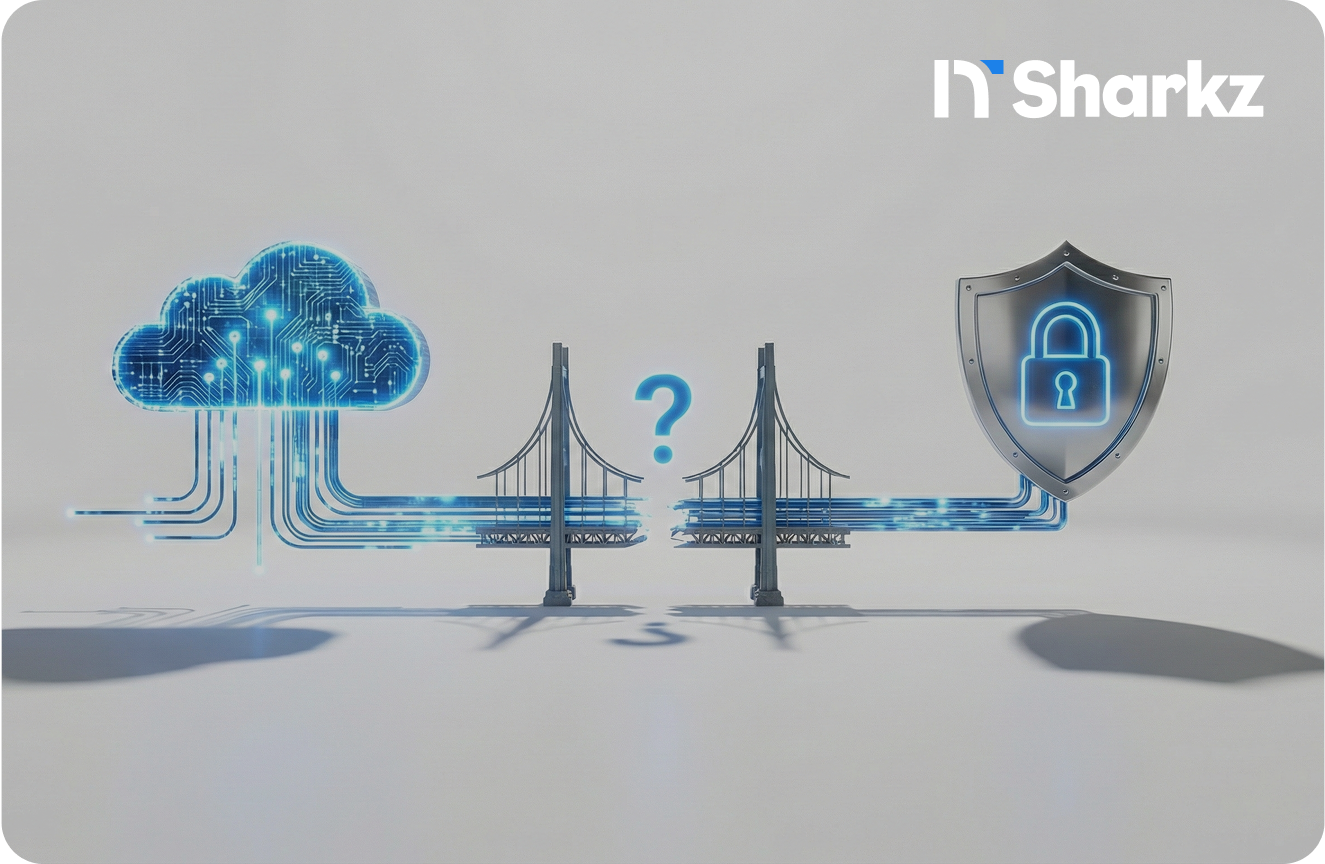
The dilemma facing European CTOs and CISOs is becoming impossible to ignore: To stay competitive, you need American AI. To stay compliant, you need European caution.
We are living through a unique tension in the global technology landscape. On one side of the Atlantic, Silicon Valley operates on a doctrine of “Data is Fuel.” The more telemetry, logs, and user behavior an AI model ingests, the smarter and faster it becomes at detecting threats. Tools like Microsoft Copilot for Security, CrowdStrike’s Charlotte AI, or Palo Alto’s Precision AI are built on this massive aggregation of data.
On the other side of the Atlantic, Brussels operates on a doctrine of “Data is Risk.” Under the GDPR and the newly enacted EU AI Act, data minimization is the law. The default stance is not to share, but to withhold.
For European enterprises, this creates a dangerous paradox. Can you actually use the world’s most advanced security tools without breaking the world’s strictest privacy laws?
The Clash of Philosophies
The friction points usually arise in three specific areas when integrating US-based AI tools into European infrastructure:
1. The “Improvement” Loop vs. Purpose Limitation
Most US-based AI agreements include a clause allowing the vendor to use customer data to “improve services” or “train the model.” In the US, this is standard commercial practice. In the EU, this is a compliance minefield.
If your security AI ingests employee emails or customer logs to detect phishing, and then uses that data to re-train a global model, you may be repurposing data without a valid legal basis. The “purpose limitation” principle of GDPR strictly forbids using data collected for one reason (security) for another (product development) without explicit consent.
2. Data Sovereignty and Transfer
Despite the EU-US Data Privacy Framework (DPF) providing a legal basis for transfers, the specter of Schrems II still looms. Many European organizations are wary of sending sensitive security logs—which often contain PII (Personally Identifiable Information)—to US-based clouds where they might be subject to US surveillance laws (FISA 702).
3. Automated Decision Making vs. Human Oversight
The EU AI Act places strict transparency requirements on “high-risk” AI systems. A US security tool that automatically locks a user out of their account based on an algorithmic “anomaly score” can be classified as a high-risk use case in employment contexts. If the “black box” cannot explain why it flagged the employee, the deployment is non-compliant.
The Path Forward: Architecture with Integrity
So, is the solution to block US tools and fall behind? Absolutely not. The threat landscape is too hostile to rely on outdated defenses.
The solution lies in implementation strategy. It requires a shift from simply “buying tools” to building secure ecosystems. This is where the engineering culture of your partner becomes just as critical as the software itself.
The Hybrid Approach
Smart European companies are moving toward hybrid architectures. They use local, sovereign instances for sensitive data processing while sending only anonymized, high-level metadata to US-based AI for analysis. This allows you to leverage the “brain” of the AI without exposing the “heart” of your data.
We are already seeing this “Architecture of Integrity” deployed by market leaders to solve the paradox:
- The Trust Layer Model: Consider Salesforce’s Einstein Trust Layer. It acts as an intermediary that creates a “zero retention” boundary. Before a prompt leaves the European perimeter to reach a US-based LLM (like OpenAI), PII is masked and replaced with generic tokens. The US model processes the logic without ever seeing the raw data, which is only “rehydrated” once the response returns to the secure European environment.
- The Sovereign Boundary: Microsoft has countered the residency issue with its EU Data Boundary. While the underlying model of tools like Copilot for Security is global, the actual data processing and log storage for EU customers are strictly confined to European datacenters, ensuring that the execution of the AI adheres to local sovereignty laws.
- The Local Alternative: For the most sensitive, “Crown Jewel” data, organizations are turning to European-native models like France’s Mistral AI. Unlike closed US models, Mistral offers “weight-available” options, allowing banks and defense contractors to run state-of-the-art AI entirely on their own local infrastructure—severing the connection to the US cloud entirely.
Compliance by Code, Not by Policy
Compliance cannot be a PDF policy document stored in HR. It must be written into the codebase. This means engineering teams must build strictly scoped APIs, automated redaction layers, and robust audit trails before the data ever leaves the European perimeter.
Tools like Lakera or Private AI are becoming essential parts of the stack, acting as “AI Firewalls” that programmatically block employees from accidentally pasting sensitive code or customer PII into public chatbots.
This aligns with a core philosophy we hold at ITSharkz: “Integrity in Every Line.”
We believe that security, compliance, and transparency shouldn’t be bolted on after a product is built. They must be built into everything we do. In an era where AI regulation is tightening, earning trust is more valuable than demanding it.
When we onboard engineers or build teams for our clients, we aren’t just looking for people who can connect an API. We are looking for engineers who understand the gravity of the data they handle. The difference between a regulatory fine and a secure system often comes down to a single decision made by a developer regarding how a specific string of data is logged.
Conclusion
The year 2026 will not be about choosing between American AI power and European privacy. It will be about the engineering prowess to bridge the two.
You can have the best AI in the world, but if your integration lacks integrity, you introduce more risk than you solve. By prioritizing transparency and “compliance-by-design,” European leaders can turn this regulatory hurdle into a competitive trust advantage.