Itsharkz

The CTO’s Guide to IT Outsourcing: Why Culture and English are the New Global Standards

In today’s economic climate, “efficiency” is the word of the year. For tech leaders managing large-scale legacy environments, the pressure is double: modernize the infrastructure (AWS migration, AI implementation) while adhering to strict “cost-killing” mandates from the board.

Strategic IT outsourcing is the escape hatch. But to do it right, you have to look beyond the traditional “vendor” model.

1. Why English-First Teams Outperform Local Language Providers

There is a common misconception that remote teams must speak the local language to be effective. In reality, for high-level engineering, English is a filter for quality.
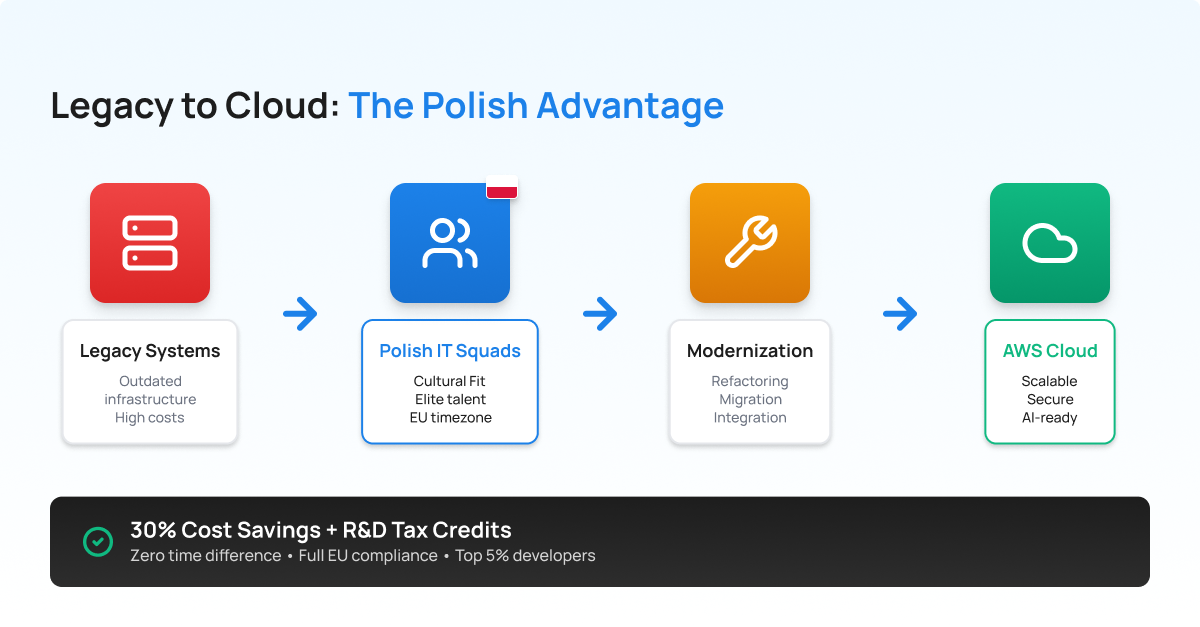
By hiring dedicated, English-speaking Polish squads, you ensure that your documentation, code reviews, and architectural discussions are aligned with global best practices. This eliminates the “translation tax” – the subtle loss of technical nuance that happens when teams try to force-fit complex AWS or Kubernetes concepts into a local dialect.

2. Solving the “Trust Gap” with Cultural Alignment

The biggest risk in outsourcing isn’t the distance; it’s the disconnect. If a developer doesn’t understand your company’s “Why,” they will deliver a product that meets the ticket requirements but fails the business.

Our approach at ITSharkz focuses on “Product Ownership.” We match engineers based on their cultural fit with your team. Do you move fast and break things? Or are you in a highly regulated industry requiring extreme precision? We provide a dedicated extension that shares your DNA, using English as the bridge to global excellence.

3. The Financial Strategic Play: Buying Speed, Not Just Hours

When the CFO demands budget cuts, they are actually demanding better ROI. Strategic outsourcing in Poland provides a unique financial trifecta:

  • High-Velocity Engineering: Polish developers are consistently ranked among the best globally for technical problem-solving.
  • Operational Agility: Scale your team up or down without the friction of local labor laws.
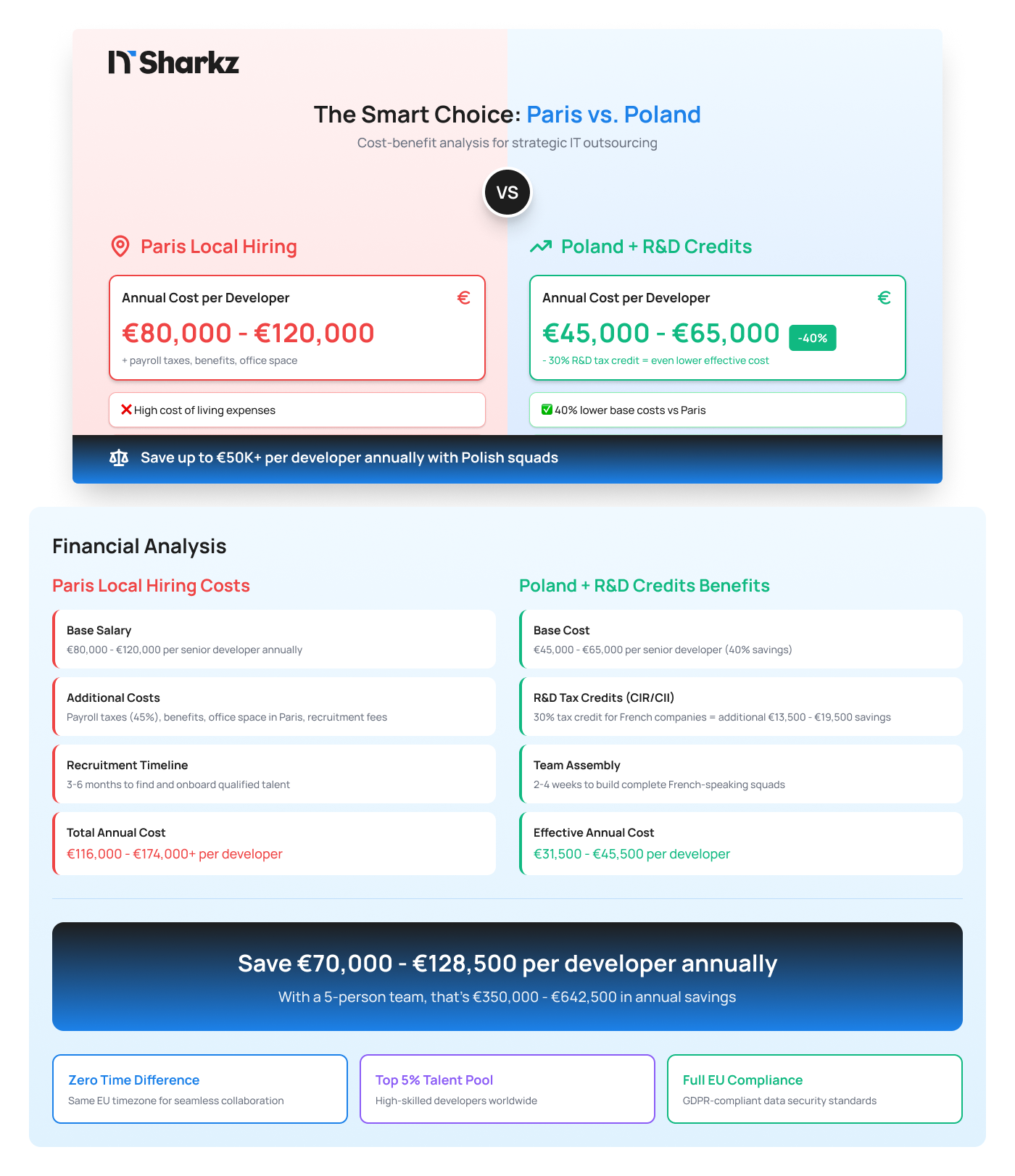
  • Tax Optimization (CIR/CII): For French-based scale-ups and enterprises, our R&D model allows you to leverage significant tax credits, effectively subsidizing your innovation roadmap.
Summary: Building the Hybrid Engineering Hub

The future of IT isn’t local; it’s integrated. By combining elite Polish talent with a culture-first integration strategy, you can finally clear your legacy backlog and start building the AI-driven features your customers are demanding.

6 Tips for Choosing the Right Software Development Outsource Company in 2026

Choosing the right software development outsource company can make or break your project. Discover six essential tips to simplify this critical decision!

Understanding Software Development Outsourcing

Let’s be honest. The term “outsourcing” often carries a stigma of low quality and communication barriers. However, the reality for modern scale-ups is different. It is about overcoming the “Talent Bottleneck” where hiring top engineers locally is slow, expensive, and risky.

When you look for an external team, you are not just buying code. You are buying speed and stability. The goal is to scale high-performing teams in weeks rather than months. This allows you to onboard elite, pre-vetted engineers 2-3x faster than local markets allow.

Benefits of Outsourcing Software Development

Why do companies look outside their HQ? It usually comes down to three factors:

  • Speed to Market: You can accelerate your roadmap immediately.
  • Access to Niche Talent: Building solutions based on specific, high-demand technologies requires dedicated engineers that are hard to find locally.
  • Focus on Core Business: By handling the technical heavy lifting, your internal management can focus on product strategy rather than recruitment logistics.

Key Factors to Consider When Choosing an Outsource Company

Don’t get distracted by the lowest hourly rate. Focus on cultural alignment. You need a partner that ensures technical excellence and a seamless fit with your existing culture.

For Western companies, the CEE region (specifically Poland) creates a “Sweet Spot.” It offers senior talent comparable to global giants but with a direct partnership model. Polish engineers are known for being direct, hardworking, and culturally aligned with Western business standards.

  1. Evaluating Technical Expertise and Experience

Most companies fall into the “Short-Term Software Trap” by investing in software that becomes obsolete in a few years. Your external partner must understand this risk.

Look for a team that prioritizes:

  • Future-Proof Architecture: Systems built for a decade of evolution, not just for launch.
  • Scalability: Modular architecture that grows with your business.
  • Code Quality: Ask about their processes for code reviews and CI/CD pipelines.
  1. Assessing Communication and Collaboration Skills

Great code is useless if the team cannot integrate with yours. You need human-centered technology where innovation is driven by people, not just algorithms.

Verify their approach to:

  • Agile Sprints: How do they handle sprints across time zones?.
  • Integration: Do they know how to integrate with existing teams using tools like Slack, Jira, or GitHub?.
  • Language: Ensure they are fluent in English to avoid costly misunderstandings.
  1. Importance of Portfolio and Case Studies

A portfolio proves they can walk the talk. However, look deeper than the logos. Search for evidence of “Partnership Over Projects”.

Does the partner stick around? We believe in long-term collaboration where the team keeps evolving the platform post-launch. Avoid firms that only show “fire and forget” projects. You want a partner that helps shape ideas and drive measurable business outcomes.

  1. Analyzing Cost vs. Value in Outsourcing

This is where the ROI focus is critical for CEOs and VPs. Cheap rates often lead to expensive technical debt.

Consider the Total Cost of Ownership. A slightly higher rate for a senior Polish developer often results in:

  • Higher Efficiency: Faster delivery of clean code.
  • Tax Incentives: For example, French partners can benefit from CIR/CII R&D tax credits when working with EU-based teams.
  • Retention: We pride ourselves on 2% rotation. This saves you the immense hidden cost of constantly re-training new developers.
  1. Reviewing Client Testimonials and References

When speaking to past partners, ask about stability. The “Remote Risk Myth” suggests that remote teams are unstable, but that doesn’t have to be true.

Ask these specific questions:

  • Did the team churn frequently? (We aim for stable remote teams that retain critical knowledge ).
  • Was the pricing transparent?
  • Did they act as ticket-takers or strategic advisors?
  1. Legal and Security Considerations in Outsourcing

Security is not an optional add-on. It must be built into the DNA of the partnership.

Ensure your chosen partner operates within a secure, EU-compliant framework. This includes:

  • GDPR Compliance: Full data security by design.
  • IP Protection: Clear ownership of the code produced.
  • Physical Security: Who has access to the hardware?.

Conclusion: Making the Right Choice for Your Business

Choosing a software development outsource company is actually about choosing a long-term business asset. You need a team that delivers excellence without borders.

Stop looking for a vendor. Start looking for a partner who will treat your platform as their own.

Ready to build a future-proof platform with a team that stays?